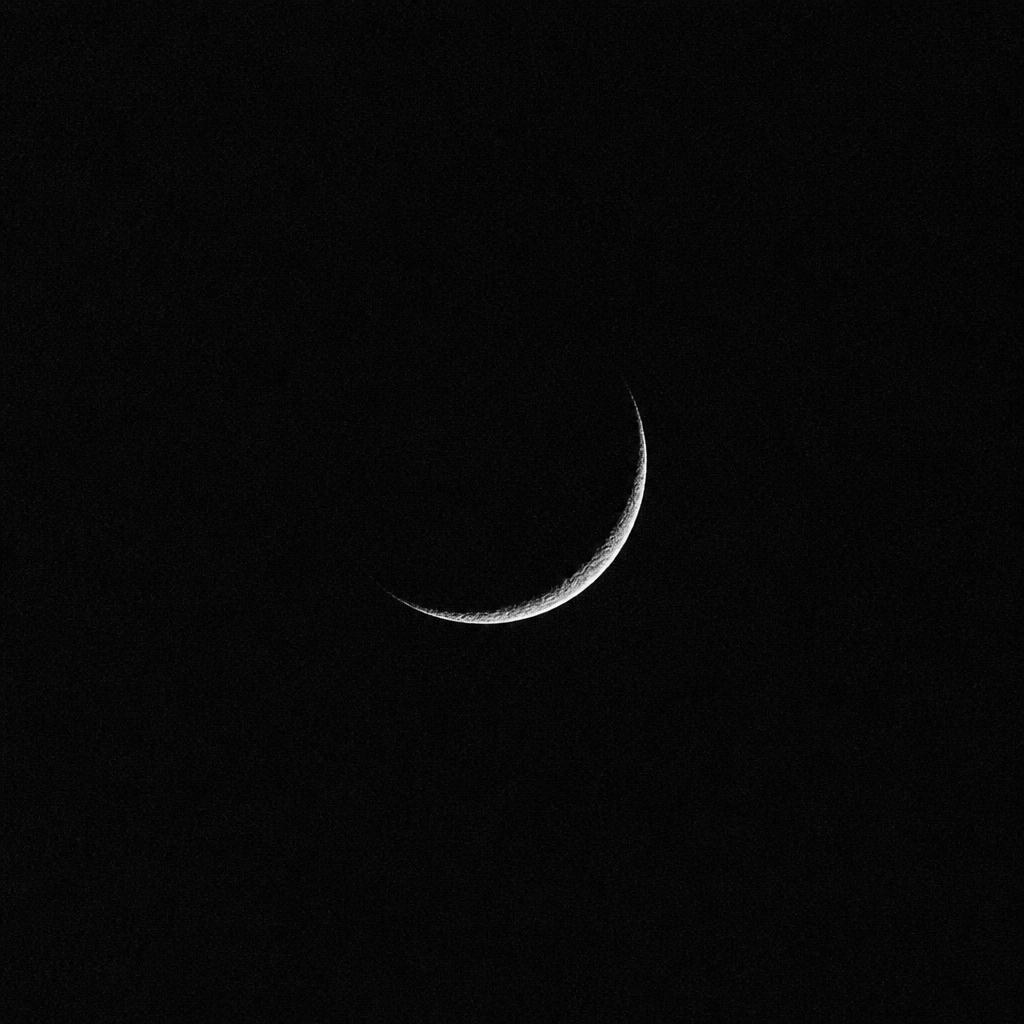
If you look west just after sunset this week, you'll barely find the moon at all: a thin silver paring, dimmer each night until the new moon arrives. In the astrological calendar this is the quietest room in the house, the waning crescent, the last few days of a lunar month. Most people scroll right past it. Astrologers circle it in advance.
Here's the mechanical picture first, because it helps. The moon doesn't make its own light; it reflects the sun's, and how much of that reflection faces Earth depends on where the moon sits in its 29.5 day orbit. At full moon, Earth sits between the sun and the moon and we see the whole lit face. At new moon, the moon sits between us and the sun and shows us its dark side. The waning crescent is the final approach: each night the lit sliver narrows, the moon rises later and later, and finally it slips so close to the sun in the sky that it disappears into the glare.
Traditional astrology reads this shrinking light as an instruction. The waxing half of the month, new moon to full, is for building: starting, asking, accumulating. The waning half is for finishing and releasing. And the waning crescent, the last three or four days, is the most specific assignment of all: clearance. Not the dramatic kind, just the honest kind. Whatever the month built, the full moon arguments and the half-finished plans, this is when you're meant to sort it: keep, return, compost.
That makes these days a famously poor window for launching anything. The old agricultural almanacs wouldn't plant during a waning crescent; the energy, they said, was draining out of things, not into them. Modern practice translates the same idea into smaller verbs. It's a bad week to send the bold pitch, announce the project, or start the diet you intend to keep forever. It's a wonderful week to unsubscribe, apologize, archive, cancel, donate, defrost the freezer, and sleep.
There's a practical logic underneath the poetry, and you don't need to believe in lunar influence to use it. A month has natural momentum. Deadlines cluster, social calendars crest around the full moon's bright evenings, and the days before a visible reset are genuinely emptier: fewer lunar 'events', less symbolic noise, less cultural pressure to be doing something. If you keep a journal, the waning crescent pages are the best ones to reread. You'll find you wrote them slower.
The body tends to cooperate with this reading, too. Sleep researchers have noticed people sleep a little longer and deeper in the darkest nights of the lunar cycle, the opposite of the full moon's restlessness. Whether that's biology or just darker bedrooms, the effect points the same direction the astrology does: down, inward, toward rest.
If you want to work with the crescent rather than just admire it, the classic practice is a closing inventory, and it takes ten minutes. Three lists. First: what actually finished this month, even the small things, because finished deserves to be noticed. Second: what didn't finish and honestly never will, the projects and plans you've been carrying out of guilt rather than intention. That list is for letting go. Third: what's still alive and coming with you into the new month. Keep the third list short. The new moon will ask you about it.
A gentler version, if lists feel like homework: pick one physical thing and clear it. The chair that collects clothes. The downloads folder. The eleven open tabs you're keeping as a to-do list. Astrology's claim is that outer clearing and inner clearing are the same gesture performed at different scales, and on this one the psychologists mostly agree.
What you shouldn't do is brace for drama. The waning crescent has none. No eclipses live here, no retrograde stations, no famous full moon chaos. It's the sky's equivalent of the hour after the guests leave: dishes, candles out, one last look around the room.
If you want to actually see it, the viewing instructions are their own small reward, because the waning crescent is a morning moon. It rises in the hours before dawn and hangs low in the east as the sky lightens, which means the people who catch it are early risers, dog walkers, and anyone waiting for a first train. Look for the slim curve with its horns pointing away from the brightening horizon, and if the light is right you'll catch earthshine: the ghostly glow of the moon's dark portion, lit by sunlight bouncing off Earth. The old almanacs called it 'the old moon in the new moon's arms', which is the entire month's story in one image.
One distinction worth knowing, because the internet blurs it: the waning crescent is not quite the 'dark moon'. Practitioners who keep the older calendars reserve that name for the final day or so, when the crescent has vanished entirely but the new moon hasn't yet been born. The crescent days are for finishing; the dark day is for genuine rest, the pause between exhale and inhale. You don't have to observe any of it. But knowing the sky has a scheduled empty room, once a month, changes how guilty the resting feels.
By the weekend the sky resets. The new moon arrives, the sliver reappears on the other side of the sun as a waxing crescent, and the whole cycle of building begins again. Until then, consider yourself excused from beginning anything. The sky certainly isn't.