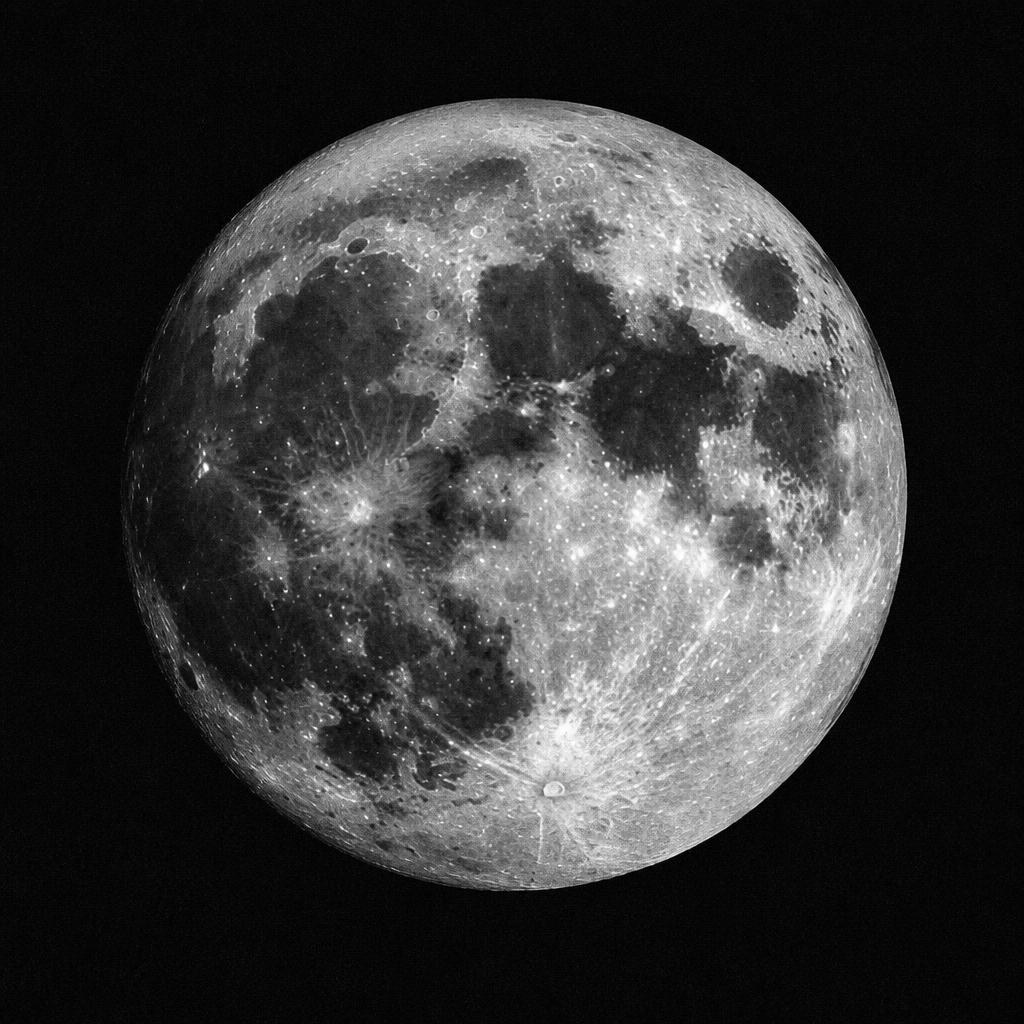
Go outside just after sunset tonight and look low in the east before the sky fully darkens, or wait until the small hours and find it rising ahead of the sun. You'll see a thin curl of light, about fifteen percent of the disk, dimmer than it was a week ago and dimmer still than it will be tomorrow. This is the waning crescent, and it is the moon on its way out, emptying toward the new moon that arrives in four days.
Most people don't notice this phase at all. The full moon gets the photographs and the folklore; the new moon gets the intention-setting workshops. The waning crescent gets skipped, a quiet transitional nothing between two headline events. Astrologers, oddly, pay it close attention. Not because anything dramatic is happening, but because almost nothing is, and that emptiness is treated as useful.
Here is the logic, stripped of mysticism. The lunar month is read as a single breath. The new moon is the inhale, a beginning. The full moon is the held top of the breath, maximum visibility, things coming to a head. The waning phases are the long exhale, and the waning crescent is the very end of it, the last of the air leaving the lungs before the next breath begins. You do not start things at the bottom of an exhale. You finish them. You let go.
Whether or not you believe the moon influences your mood, the practical reframe is genuinely worth borrowing. We live in a culture obsessed with beginnings: new year, new month, new habit, fresh start on Monday. We are far less practiced at endings. We leave projects technically unfinished. We keep tabs open as bookmarks for guilt. We hold grudges past their usefulness because putting them down feels like losing. The waning crescent is a built-in cultural permission slip to do the unglamorous work of closing loops.
Consider what 'clearing' actually means in a normal Thursday. It means going into your email and archiving the threads that are resolved but still bolded in your mind. It means deleting the draft you've rewritten four times and will never send. It means returning the dish to the neighbor, the book to the friend, the borrowed energy to its rightful owner. None of this requires belief in celestial mechanics. It only requires the recognition that unfinished things take up room whether you look at them or not.
There's a specific kind of relief in finishing rather than starting, and it's underrated precisely because it doesn't feel productive in the dopamine sense. Starting something new gives you a hit of possibility. Finishing something old gives you something quieter: space. The waning crescent favors the second feeling. If you've spent the month accumulating, this is the few days to set some of it down before the new moon hands you a fresh armful.
Forgiveness belongs in this category too, and the astrological tradition is unusually direct about it. Forgiveness is not a beginning. It is an ending: the closing of an account you've been keeping open, often for years, often without the other person's knowledge. You can forgive someone who will never apologize. You can forgive yourself for a decision you'd make differently now. The fading moon doesn't make this easier, but the framing does. Think of it as archiving rather than approving. You're not saying it was fine. You're saying it's over and you'd like the storage space back.
A small practical note about timing, since people ask. The exact phase doesn't switch like a light. The moon has been waning for over a week and will keep waning until the new moon four nights from now. So you don't need to do anything precisely tonight to be 'in sync.' These few days are simply a window, and the window is widest now. If clearing on a Thursday feels arbitrary, that's because it partly is. The value isn't cosmic precision. It's having a reason to do the thing you've been avoiding, and the moon is an old, reliable excuse.
If you want a sharper test of whether this resonates, try the inverse. Notice how badly new beginnings tend to go when you force them during an exhale: the diet you start exhausted, the project you launch while still buried in the last one, the relationship you rush into before the previous one is genuinely closed. The tradition would say you were planting in spent soil. You don't have to call it that. You can just call it bad timing, and let the next new moon be the planting.
There's also something honest about a dimming moon that the full one can't offer. The full moon insists on being seen. The crescent is almost shy, a paring of light, a fingernail. It models a kind of completion that isn't a triumph or a finale, just a quiet diminishing toward rest. Most of our endings are like that in real life. They don't come with fireworks. They come with a closed tab, a returned text, a slow unclenching of something you'd held too long.
So here is the thing to do tonight, and it costs nothing. Pick one open loop, just one. The unsent message, the unreturned item, the resentment you've been rehearsing, the task that's secretly already done. Close it deliberately. Send it or delete it. Return it or release it. Mark it finished out loud if that helps. Then step outside, find that thin curl of light if the clouds allow, and notice that the sky is doing the same thing you are: making room. In four nights it goes dark, and then it begins again. You'll be lighter for it when it does.